

2026-04-10 |
Unlocking On-Farm Energy: Planning Reforms for Solar Trackers
The recent streamlining of planning for on-farm wind turbines–lifting height restrictions to 30 meters–is a significant step for decentralised renewable energy.
However, as the government finalises the National Planning Policy Framework reforms and the new Land Use Framework, a critical disconnect remains: solar trackers remain tethered by disproportionate planning restraints.
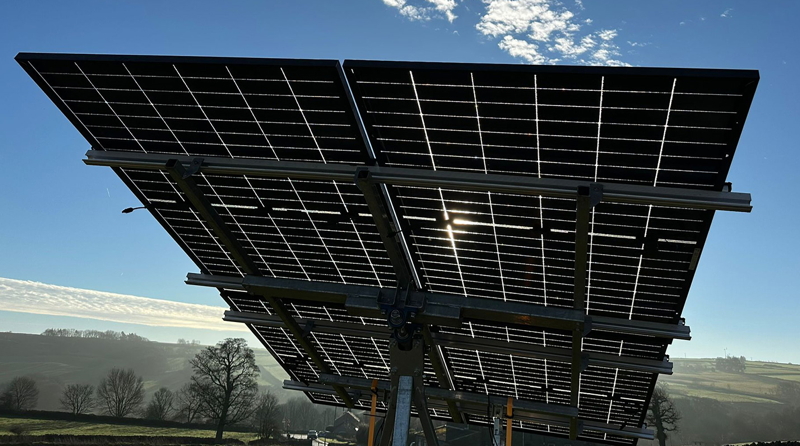
Corrie Energy’s Latitude40
hybrid tracking system.
Traditional solar often limits what you can do with the ground below, whereas solar trackers allow for genuine multifunctional land use. The increased height and movement of solar trackers allow for farm processes to continue uninterrupted, all while delivering energy yields up to 30% higher annually, than fixed panels.
For many farms, rooftop solar has already reached its limit. Trackers are the ideal technical complement; by following the low sun, they provide a consistent generation curve during the early morning and late afternoon—periods where south-facing roofs often underperform. Despite these benefits, the administrative costs and application requirements for planning understandably deters farmers.
Corrie Energy are currently working with Community Energy England and DESNZ to advocate for trackers to receive the same Permitted Development status as other small-scale renewables. To succeed, we need your evidence.
The ongoing planning consultation is our window to influence reform. Farmers can submit evidence here on how trackers could offset rising operational costs, and how current regulations are hindering business stability.