

2017-11-22 |
   |
Another Good Year for UK Forestry Investment
Over £111 million of forestry was sold in the past year, 40% more than in 2016, according to the latest edition of the UK’s leading forestry investment report.
Tilhill Forestry and John Clegg & Co report on a buoyant market characterised by high-value properties and portfolios, robust demand and a steady flow of new investors in the latest annual UK Forest Market Report, launched in London today (Wednesday 22 November).
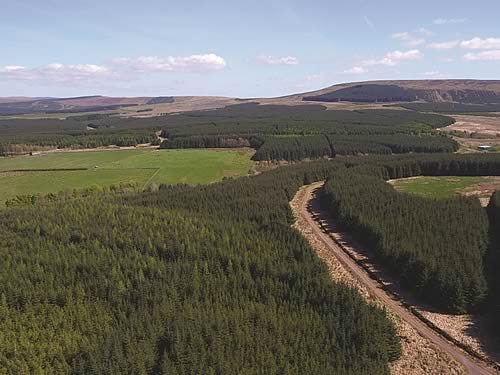
The report contains many key highlights based on information obtained from the sales of commercial forest properties between 1 October 2016 and 30 September 2017. It reports that the market returned to its normal growth after a quieter year in 2016 with 87 forest properties sold – compared to 67 the previous year – for a total of £111.04 million, up £31.8 million from 2016 and against a five-year average of £104 million a year.
Other highlights reveal that a total of 17,272 hectares were traded, 78% of which were in Scotland, underlining the country’s dominant position in the commercial forestry marketplace. Forestry in England amounted to 18% of the market whilst the Welsh share was 4%.
The report confirms the MSCI IPD Index findings that the industry is in good shape with annualised returns of 10.7%. It continues to outperform most other asset classes – despite a fall from the 10-year annualised rate of 17.4% - and it also benefits from strong political support due to the industry’s economic contribution, green credentials, carbon sequestration and biodiversity
Peter
Whitfield, Tilhill Forestry’s Business Development Director,
states in the report:
“We have been encouraged to see a steady
flow of new investors into the market attracted by the good returns,
the potential for tax planning and/or long-term capital growth,
and frequently just a genuine enthusiasm for getting involved in
forestry.”
Fenning
Welstead, Partner in John Clegg & Co’s Edinburgh office
analyses this further. He states:
“Large scale commercial plantations
have been in strong demand but the supply of such properties is
decreasing. With some notable exceptions, none have been established
for almost thirty years. Many of the larger private plantations
are now in the ownership of collective funds and portfolios. Whether
they will come to the open market again is debatable and these
funds continue to seek further acquisitions. There have been some
very strong sales this year as a result.”
The report highlights the demand for farmland with potential for
new planting schemes and underlines the fact that the future fortunes
of farming “in the changing world of Brexit and generational succession
will have a significant impact on forestry”. Mr Welstead states:
“There is a move towards exciting new afforestation programmes
with positive support from grants and political will. Potentially,
significant opportunity for afforestation may result either from
existing farmland owners planting parts of their land or from changed
ownership to forestry investors.”
Summarising the report, Mr Welstead said:
“The forestry industry
is in good shape but much needs to be done to safeguard it for
the future. We need to engage in afforestation and we need to promote
an understanding of the need to plant trees.”