

| 2013-10-21 |    |
South West Leads The Way With Healthy Livestock
Beef and dairy farmers in the South West have slashed the costs of hidden diseases – and now other producers across the country can do the same.
A major industry conference is bringing together international
experts on common cattle diseases, and will present the findings
of the three-year Healthy Livestock project, which has seen participants
boost productivity by an estimated £16.7m a year.
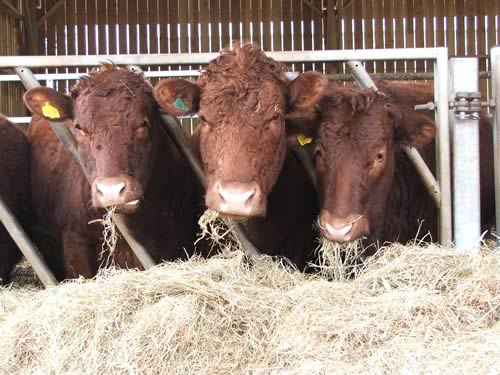
Red Ruby beef cattle
The EU-funded project, which is managed by the Rural Business School at Duchy College, provided training, one-to-one visits and advice with the farmers’ own vets, to draw up individual health management plans and tackle infectious diseases on the farm.
“We are delighted with the success of the Healthy Livestock project, which has reached more than 8500 farmers across the South West,” says project manager Paul Ward. “With the current round of funding drawing to a close, it is only right to show how other producers can benefit from the valuable lessons we’ve learnt, and continue to drive herd health forward.”
Teresa Allward, who took part in
the lameness, BVD, Johne’s and respiratory disease strands of the
project at Langford Farm, Woollard, Somerset, is delighted with
the results.
“We have halved our incidence of lameness in two years
and cut treatments by 25%,” she says. “We also know that we’re
now low risk for respiratory disease, BVD and Johne’s, and we’ll
definitely keep following through with the health plan with our
vet. It’s fantastic having such a comprehensive approach of training
and one-to-one vet advice; we’ve now got a lot more confidence
going forward,” she adds.
The conference will be held on 14th November
at Padbrook Park, Cullompton, Devon, and is free for people to
attend. The morning session will focus on Johne’s Disease and Bovine
Viral Diarrhoea, with keynote speakers including Søren Nielsen,
who will outline the work done in Denmark to control and eradicate
Johne’s Disease.
“The average test-prevalence of Johne’s can be reduced by one percentage point a year; often 5-10% of the herd is infected, so reduction to almost nothing can be achieved in 5-10 years,” he says. “But few herds are average, so there is quite a bit of variation around that, and the level of success mainly depends on the amount of risk-based control producers implement on the farm.”
A shocking 63% of herds screened in
the project were infected with Johne’s Disease, but few farmers were
aware of the infection, or the hidden losses it carries.
“By accepting
the likely presence of Johne’s in the herd and taking simple steps
to reduce infection on farm, producers can have a significant impact
on disease rates,” adds Mr Nielsen.
The second half of the conference will include breakout sessions on mastitis, lameness, respiratory diseases, risk-based health planning and emerging diseases. There will also be numerous companies and industry experts on hand throughout the day to offer advice and technical support to conference delegates.