

| 2013-11-26 |    |
The Genetics of Polling
Breeding polled cattle can make it easier to manage and transport stock, saves dehorning and reduces the chance of injuries to stock and staff.
The presence or absence of horns in cattle is controlled by a major gene and there are two forms of the gene that control horn development. Each animal inherits two copies of the gene from their parents, one from their sire and one from their dam. The two forms of the gene are:
P – This causes polling. Capitalisation of the letter indicates it is the dominant form
p – This causes horns. Lower case styling indicates it is recessive to the other form.
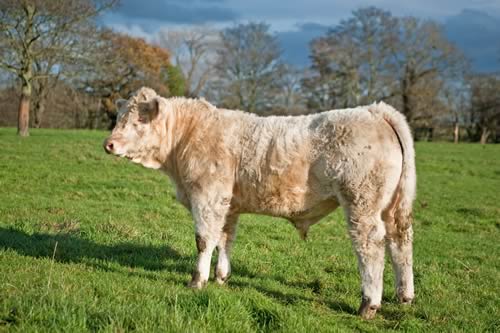
photo © jennifermackenzie.co.uk
When the two gene copies are combined together in the offspring, we refer to the resulting combination as the genotype of the progeny. The physical appearance of the animal is called the phenotype. With the genes for polling, there are three possible genotypes but only two phenotypes – horned or polled:
| Genotype | Phenotype | Appearance of offspring if mated to horned cattle |
| PP | No Horns (Polled) | Will not produce horned offspring, but calves may have scurs |
| Pp | No Horns (Polled) | On average 50% of offspring will be horned and 50% polled |
| pp | Horns | 100% of offspring will be horned |
For example, a dam and sire are both polled and both genotype Pp, so within their resultant offspring 75% of the calves will be polled and 25% will have horns (see diagram). Only 25%, however, will have two copies of the dominant polling gene (P) and produce only polled offspring. The half of the progeny that carry one copy of each gene (Pp) can produce both polled and horned offspring and 25% of their calves will have horns.
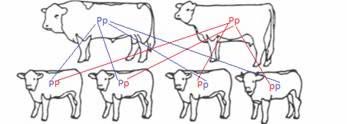
Breeding for polling
Selecting for polled animals is difficult, because a visibly polled
animal could be carrying one or two copies of the P polling gene.
But only a bull with two copies of the polling gene (PP) will have
all polled offspring. Historically, a PP bull has been detected using
test mating programs, where a polled bull is put to horned cows.
A single horned calf would mean the bull must be Pp and no horned
calves would increase the chances of him being PP. The development
of DNA testing can speed up this process, through testing for the
two forms of the gene. However, there are costs involved and results
can be inconclusive.
Scurring
Some polled cattle may grow scurs, small growths of horn-like material.
The inheritance of scurs is usually influenced by another gene to polling,
found on a different part of the animal’s DNA.