|
|
|
|
|
|
|
|
|
|
 |
 |
|
|||||||
 |
 |
 |
 |
 |
 |
 |
 |
|
|
|
|||||||||||||||||||
|
|
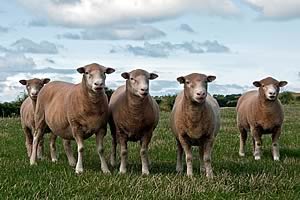
Use EBVs When Selecting Stock Rams Sheep producers who keep their own female replacements should use EBVs (Estimated Breeding Values) when selecting stock rams in order to maximise the performance of their flock, according to advice from Signet Breeding Services, a division of EBLEX.
The economic performance of most lowland flocks hinges on the number of lambs successfully reared per ewe - a function influenced by the genetic potential of the breeding ewe. While a visual inspection of a ram is important for assessing his structural soundness, a ram’s appearance tells you little about his genes for maternal performance or how his daughters will perform. Three maternal traits are routinely produced by Signet: · Eight Week Weight EBV – an indicator of genes for early growth rate · Maternal Ability EBV – an indicator of genes for milk production · Litter Size EBV – an indicator of genes for prolificacy Flocks looking to increase prolificacy will often select rams born as multiples rather than those born as singles – but due to the low heritability of the trait this can be a relatively inefficient way to make progress. Producers would be better advised to look at the Litter Size EBV, as this will take into account records on hundreds of relatives to give a far truer picture of an animal’s genes for prolificacy. Planning is important When buying a ram, producers must assess their flock breeding objectives and identify areas where performance can be improved through selective breeding. The retention of female replacements should be a planned process and not a knee jerk reaction to high replacement prices. Flocks should work out the relative cost of retaining homebred replacements – including the potential benefits that could be gained by controlling the breeding programme and reducing the risk of introducing disease into the flock verses the extra input costs required to rear a ewe lamb until it joins the main flock as a breeding animal. Increasing interest in maternal breeds The recording of maternal breeds has been a major area of growth in recent years. High EBV Poll Dorset rams consistently achieved a premium at the recent May Fair, where buyers were using EBVs to select those rams with the best genetic potential. At the same time the number of Lleyn sheep recorded with Signet has risen from about 7,000/annum to 18,500/annum in just 10 years providing Lleyn breeders with a major opportunity to drive genetic change within the breed.
|
||||||||||||||||||

|
|
||||||||||||||||||
| home | agri-services | pedigree
pen | news | dairy | beef | machinery property | organisations | site map |
|||||||||||||||||||
|
|
|
|
|
|
|
|
|
|
|
|
|
|
|
|
|
|||



 |