2012-11-14
Robert Moore, Rural Practice Surveyor of George F White
 |
Robert Moore, Rural Practice Surveyor of George F White gives his professional advice to farmers who have gas mains, electricity lines and water pipes on their land.
Where do you stand as a farmer or landowner when it comes to allowing access to gas, electricity or water companies who need to work on your land? Their presence can cause all sorts of time-consuming disruption to your schedule particularly during busy times of year, or if you have to move stock. It can also result in damage to property and land especially if it’s wet.
Most utility companies operate under various Acts of Parliament and therefore it is vital for farmers to have a good understanding of the underlying legislation before any access is permitted. Ultimately you need to be assured upfront that you will be fully compensated for any loss you incur.
"I would advise reinstatement rates are agreed before entry is permitted."
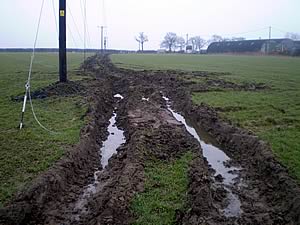 |
Inevitably any access requirement is going to cause some level of disturbance whether it be physical damage to the ground, loss of crops, inconvenience of moving stock and cost of re-housing, your time or any subsequent reinstatement required once the works are complete.
The recent wet weather will only exacerbate such loss as utility improvement programmes become ever increasingly protracted.
In far too many circumstances the landowner and/or occupier is not fully briefed by the utility company at the start, so it is important to iron out the implications of any utility scheme and have a full understanding of works involved.
Under a normal utility improvement scheme, there are various compensation issues to address:
- Firstly, that relating to loss of income, and with commodity prices fluctuating, it is important to get the timing and detail of any claim correct.
- Secondly, there will inevitably be some reinstatement to do once the works are complete. It amazes me the amount of times utility companies take access over the winter period and I have been involved in far too many cases where no respect or consideration has been given to the land or farmers’ property. I would advise reinstatement rates are agreed before entry is permitted which may include hourly charges for undertaking sub-soiling, discing etc to remove any deep ruts or soil compaction caused by the works. This makes a final claim much easier to settle and reduces the need for speculation. Many underestimate the time and cost of such reinstatement measures and this can be a contentious point when trying to settle a claim with the utility company.
- Thirdly, inconvenience and disturbance payments. It is vital that from the start, you keep a record of all your time spent in correspondence with the utility company and any inconvenience this may bring, including your time speaking with an agent representing you. Such time records should also include any additional requirements such as amendments to your agri-environmental stewardship scheme, additional time spent in spraying, harvesting or cultivating or taking more time feeding or checking livestock.
- In addition to the above, there may also be a capital payment due if a new easement is created. This will relate to the diminution in value to the property the installation of the new apparatus brings. Such a claim should not be overlooked, and it is very important to get a clear understanding of the effect such apparatus can have on the value of the underlying asset. If a new wayleave is created or an existing one altered, make sure the agreement is accurate and you are receiving the correct annual payments.
- Lastly, don’t forget that the utility company should cover all your expenses including the appointment of an agent and other professionals to act on your behalf. Getting professional advice can be beneficial to ensure you are fully compensated and all your concerns are addressed right from the start.
 Askham Bryan College Announces £9m Investment Programme Askham Bryan College Announces £9m Investment Programme
Fresh Start Uplands Academy Launched
Innovation Priorities for Primary Food Production in the UK to 2030
|